Cat Ba Island construction 2026 has become one of the most-searched phrases among travelers planning a trip to northern Vietnam. If you’ve seen TripAdvisor reviews calling Cat Ba “dead” or Reddit threads describing a “concrete jungle,” you’re not alone in wondering: has this island been ruined? We run small-group tours here every day. Here’s the honest answer from people who live on the island.
What Is the Cat Ba Island Construction 2026 Project?
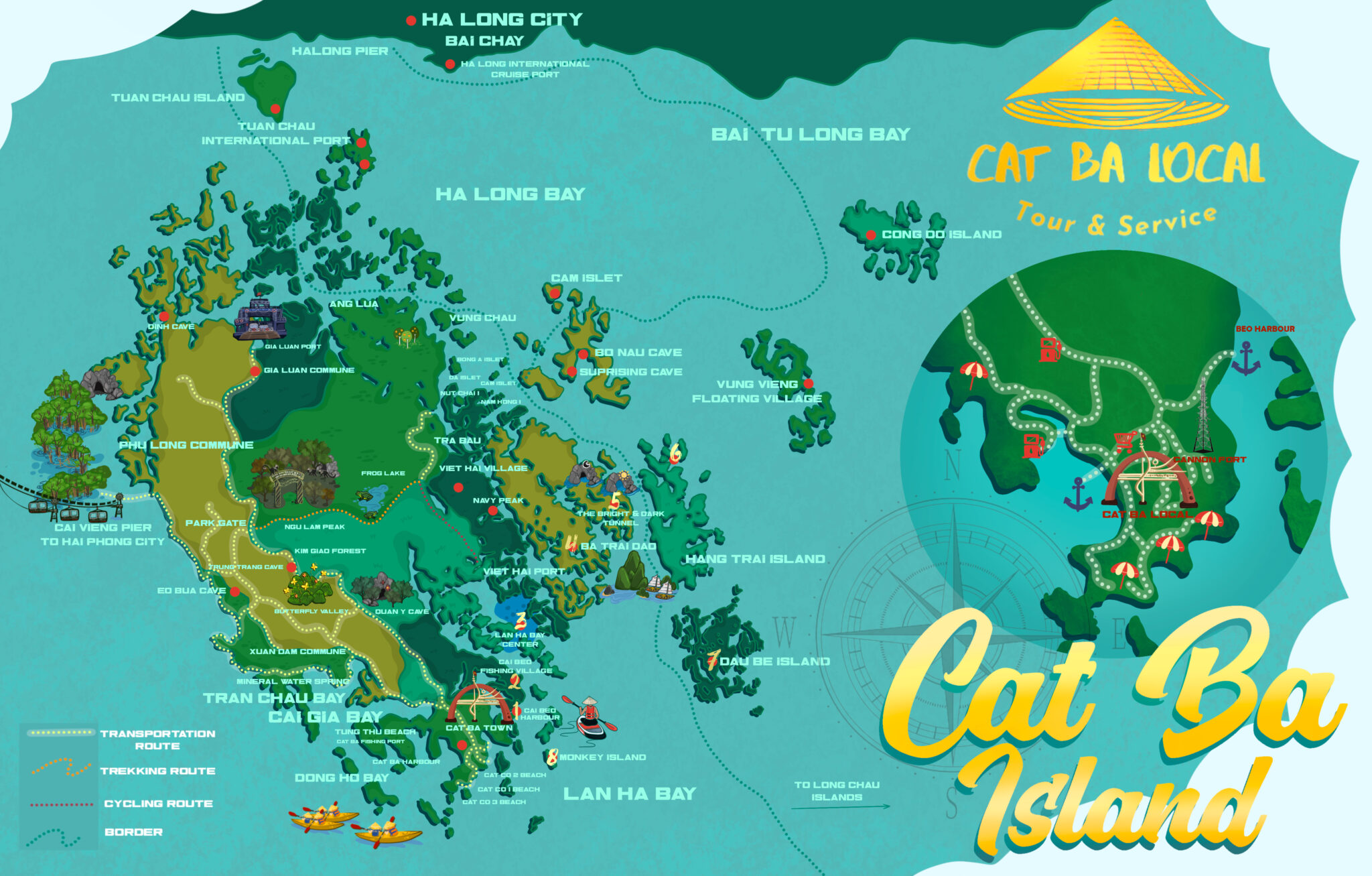
The development is called Xanh Island (Thành phố Vịnh Trung Tâm — “Central Bay City”), covering approximately 50 hectares at the central town waterfront — the part of Cat Ba that faces west toward the ferry terminals and boats heading to Hai Phong city.
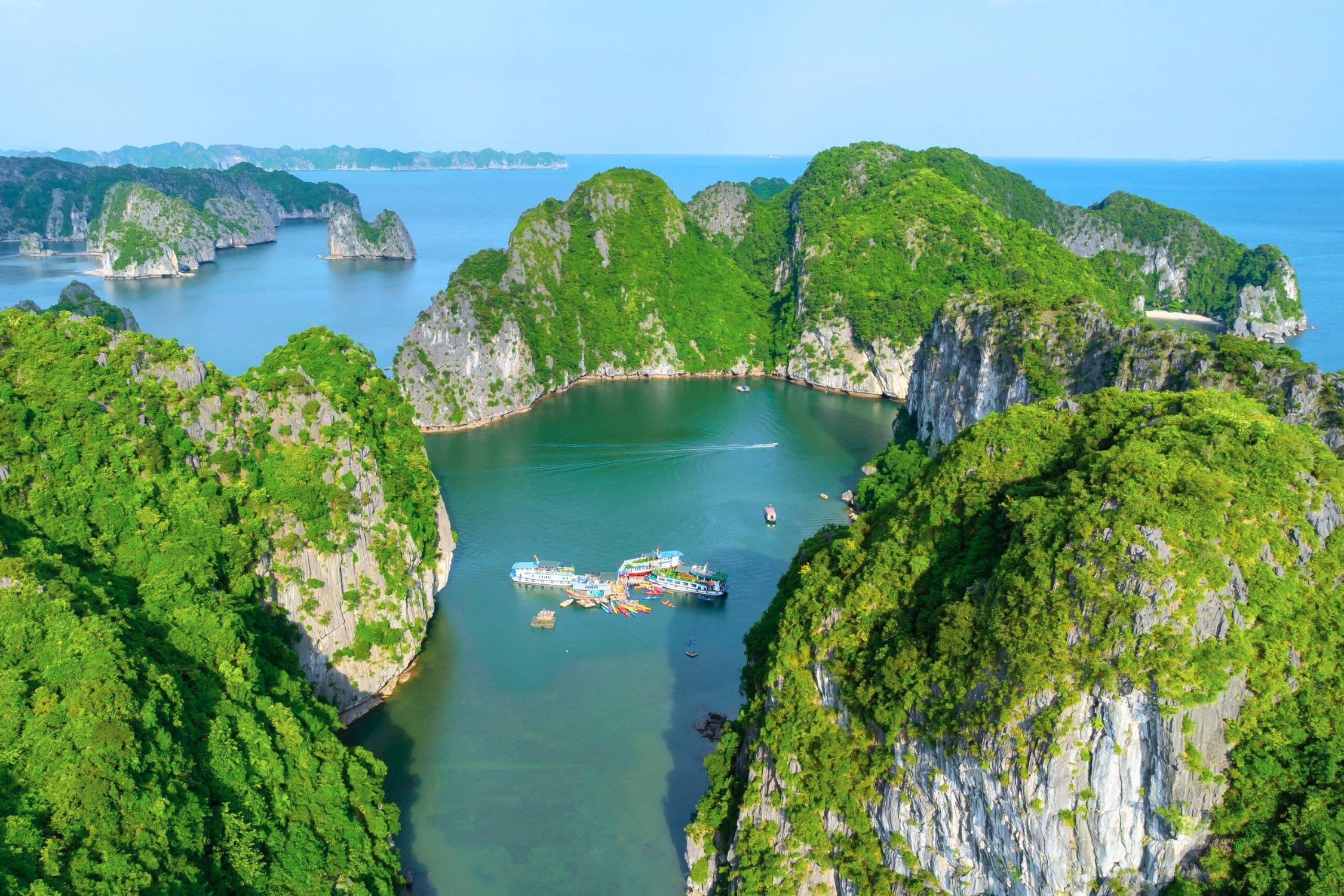
This geographic distinction matters enormously. The project sits in Dong Ho Bay — the central town harbor. It has nothing to do with Lan Ha Bay, which faces east and is an entirely separate body of water, accessible only by a 3-kilometer drive to Ben Beo pier followed by 30–60 minutes by boat.
What’s On the Ground in 2026
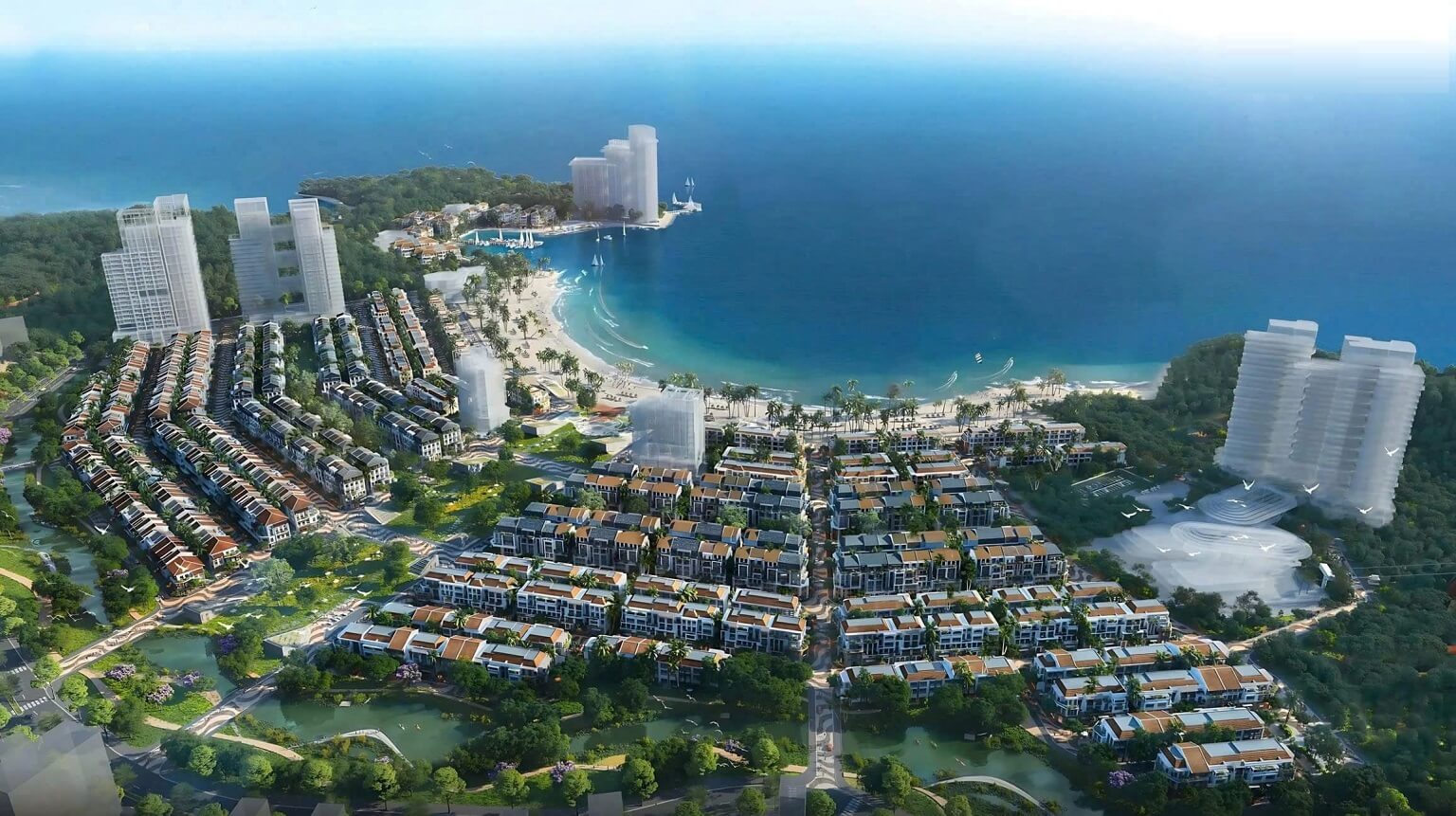
As of mid-2026, here’s what actually exists at the construction site:
- The central promenade and Con So Square are complete and open — a busy waterfront with restaurants, shophouses, and now the longest public beach in central Cat Ba
- Villa units are approximately 80% complete
- Three high-rise towers are still under construction at around 40%
- Full project completion is targeted for 2027, though real-world timelines may shift
Infrastructure around the island has also been upgraded significantly: ferries now run with double the old capacity, and a new cable car gets passengers across the channel in 10 minutes instead of waiting for boats.
Did the Cat Ba Island Construction Involve Land Reclamation?
Yes, partially. Some reclamation was done to create the buildable footprint in the central harbor — the area where fishing boats and old Hai Phong ferries used to moor. Hotels and restaurants on the town side that used to face open water now face the development instead.
We won’t dress that up. If you were attached to the old open-water view from Cat Ba town’s central waterfront, that view has changed.
But this area was never what international travelers came to see. The town waterfront has always been commercial — dense guesthouses, karaoke bars, packed seafood restaurants, diesel-smelling ferry terminals. What replaced it is cleaner, more organized, and better managed than what was there before.
The critical point: the reclamation happened in the town harbor, not in Lan Ha Bay, not inside Cat Ba National Park, and not anywhere near the UNESCO-protected zone.
UNESCO Warnings and Cat Ba Island — What Actually Happened
There were UNESCO concerns — but the story is more nuanced than most headlines suggested. Two separate issues often get conflated online, and it’s worth separating them clearly.
The UNESCO concern specifically about Cat Ba was about illegal construction on beaches inside Lan Ha Bay — bungalows and small resorts built without permits on wild beaches within the biosphere reserve. After UNESCO monitoring missions and working sessions with local authorities from 2023 onward, the government required those illegal structures to be demolished and the beaches restored to their natural state.
The result: Lan Ha Bay’s beaches are arguably in better condition now than they were five years ago. According to Tien Phong, UNESCO’s monitoring mission in March 2025 specifically assessed Lan Ha Bay and the work being done to restore its protected status.
The Xanh Island development in the town center was a separate matter, covered by Hai Phong city’s master plan under Vietnam’s national development framework, and falls outside the buffer zones of the World Heritage site.
Lan Ha Bay and Cat Ba National Park: What the Construction Has Not Changed
Here is the straightforward answer to the question that matters most:
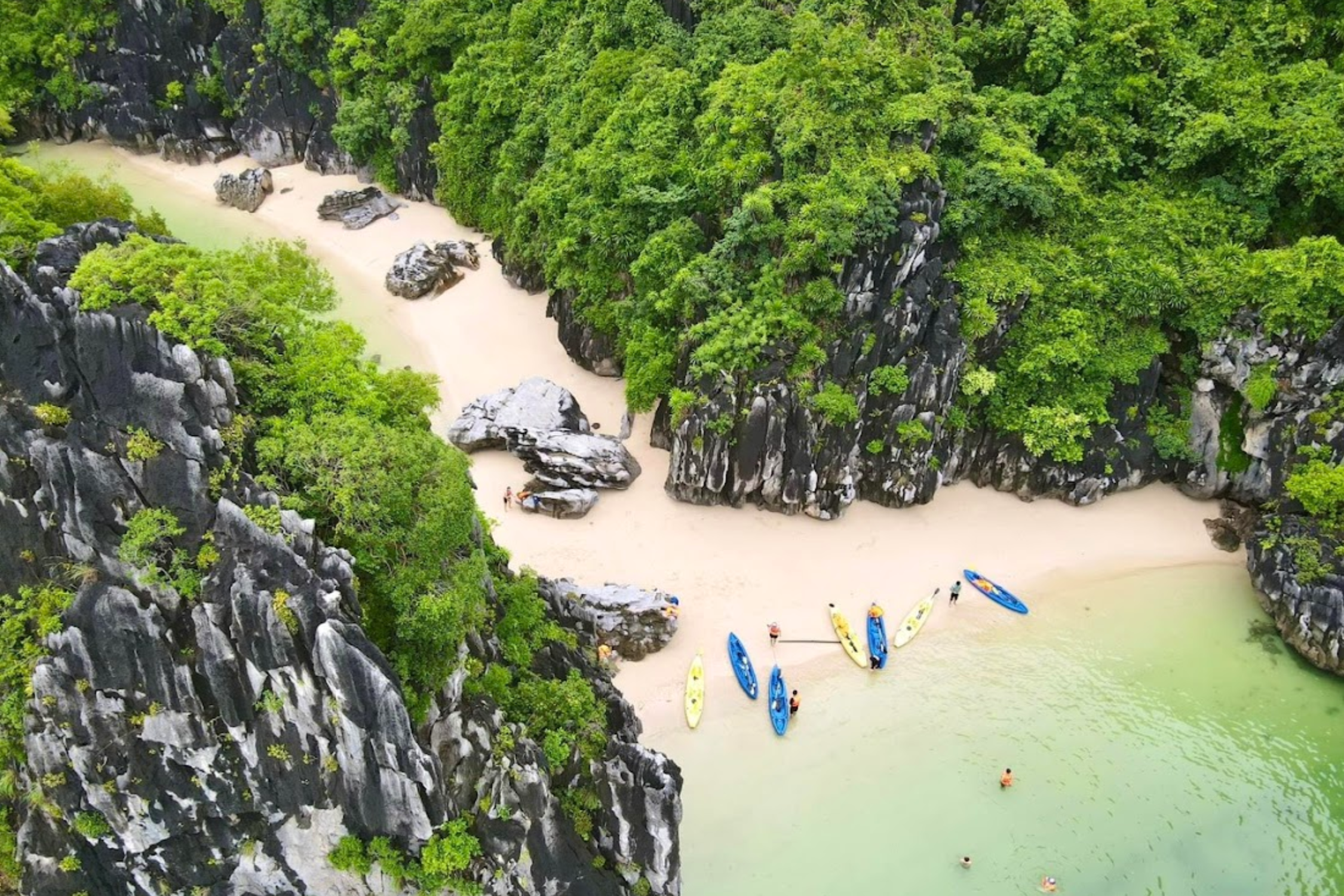
80% of Cat Ba Island’s land area is National Park. 100% of Lan Ha Bay is a UNESCO World Biosphere Reserve. Neither has been touched by this development.
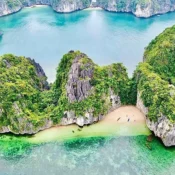
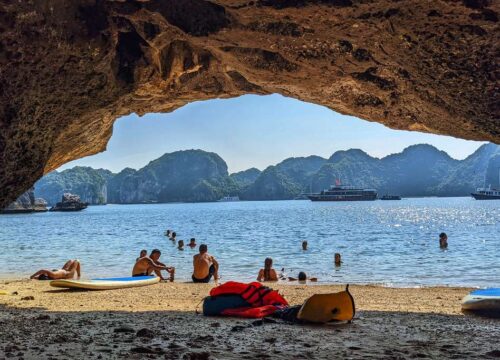
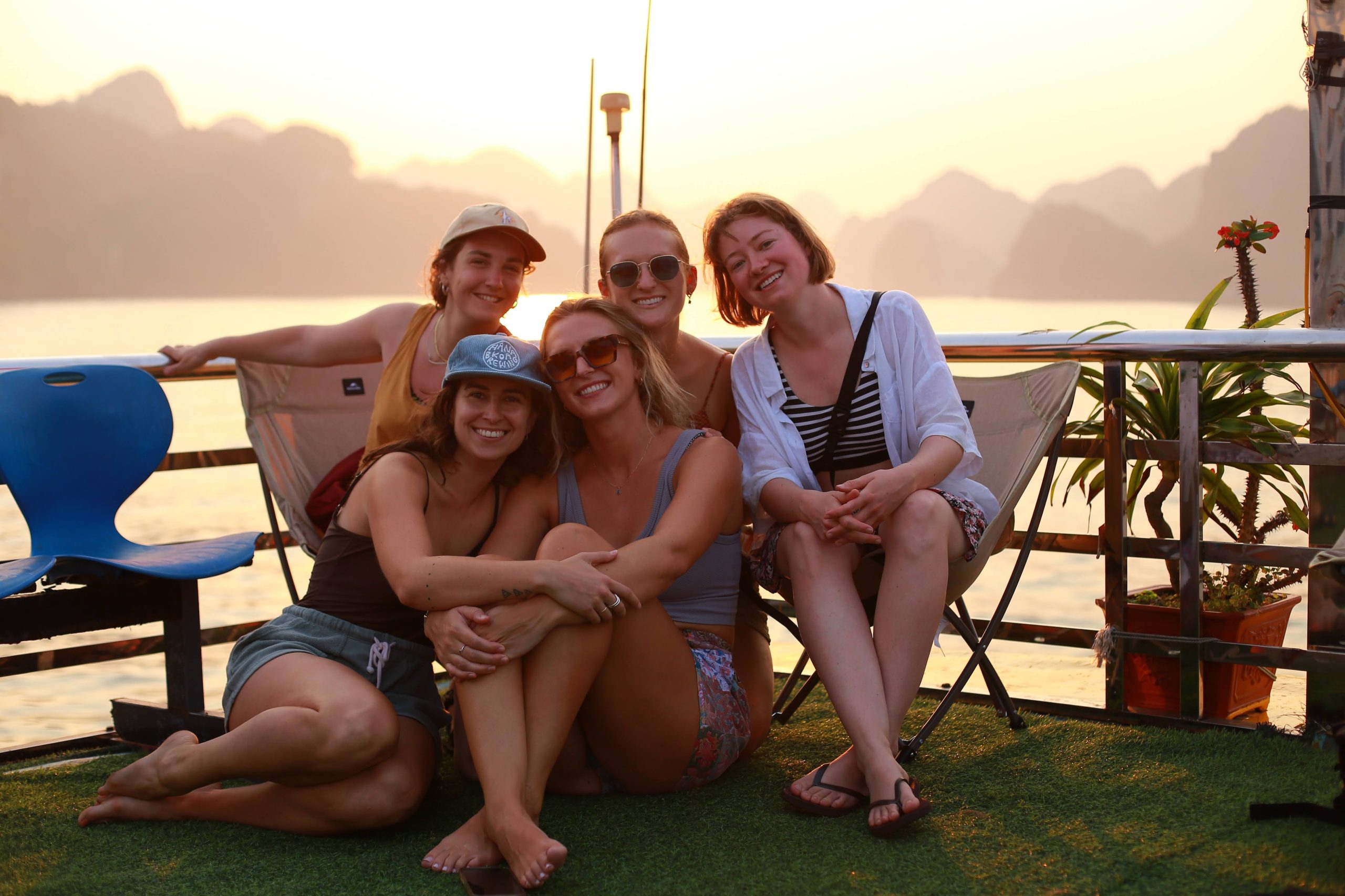
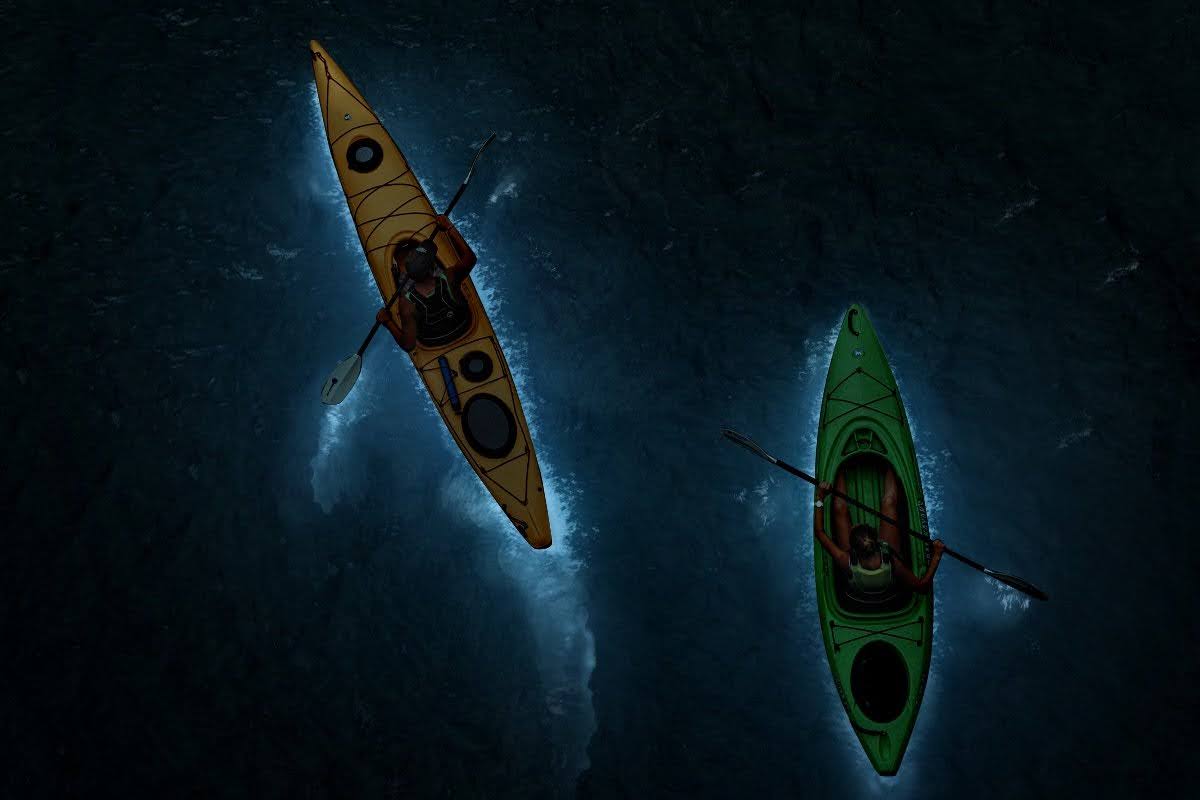
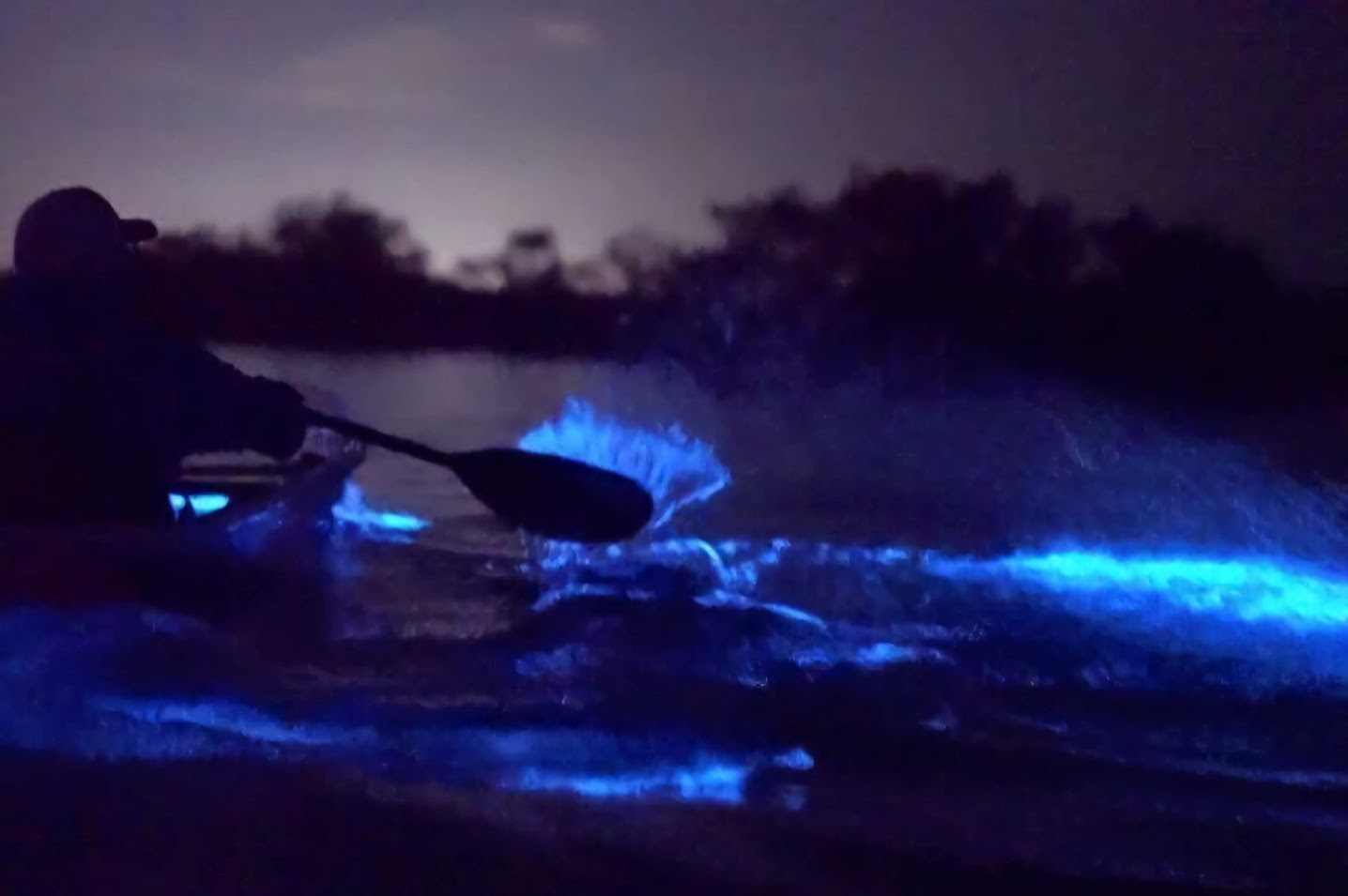
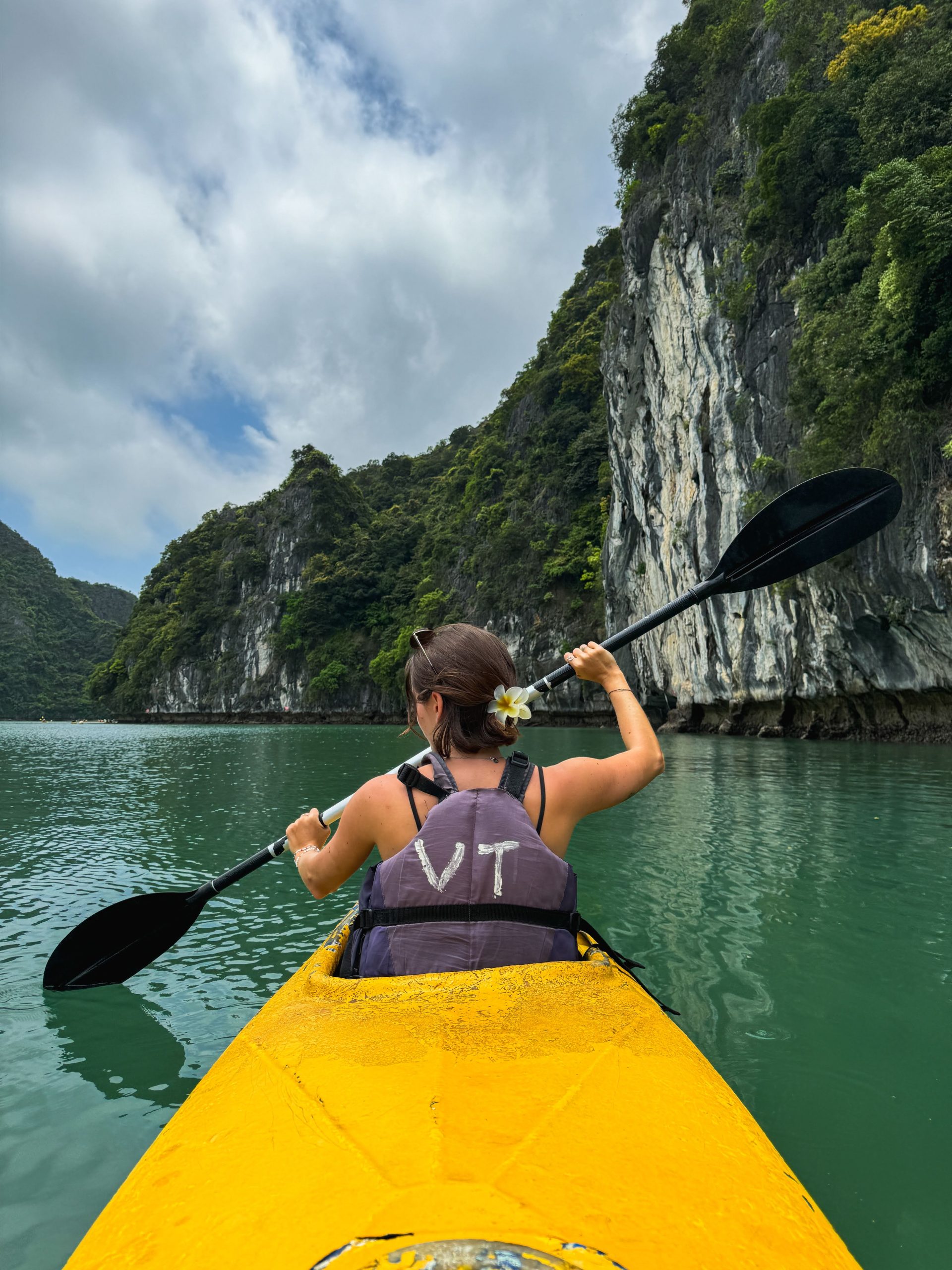
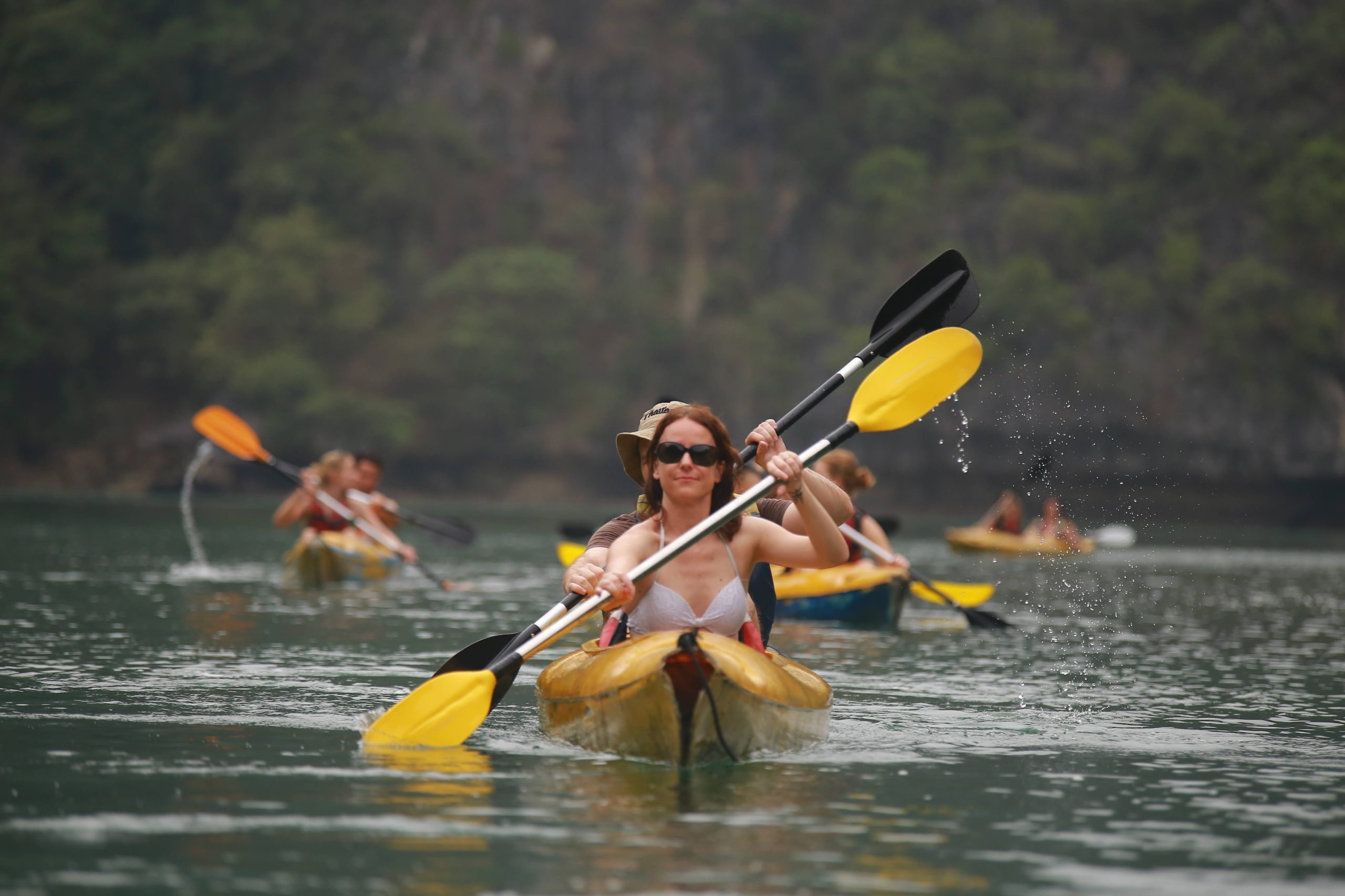
The karst lagoons, the hidden beaches, the kayaking corridors, the overnight anchorages, the bioluminescent plankton waters — all of that exists in the same state it did before the Cat Ba Island construction began. The morning light on the limestone cliffs looks exactly as it did five years ago. The water is clear. The remoteness is intact.
We run tours there every day. We would tell you if it had changed.
How the Construction Has Affected Local People
This isn’t a simple story, so we’ll give you both sides.
The Genuine Positives for Cat Ba Residents
Land values and household incomes have risen significantly. Infrastructure that was genuinely embarrassing before 2020 has been substantially upgraded. The broader tourism market, especially domestic visitors, has grown considerably — creating real income for local families. And perhaps counterintuitively: the increase in supply has reduced the price-gouging that plagued Cat Ba during peak season. More capacity means more competition, which means fairer prices for visitors.
The Real Pressures on Small Local Businesses
Small family-run businesses face pressure to upgrade or risk being priced out. An influx of outside investors coming to Cat Ba for the opportunity brings capital but risks diluting the island’s local character. Whether compensation for any displaced residents was adequate is a harder question we don’t have full visibility into — and we’ll say so rather than pretend otherwise.
What Cat Ba Island Construction Means for Our Tours
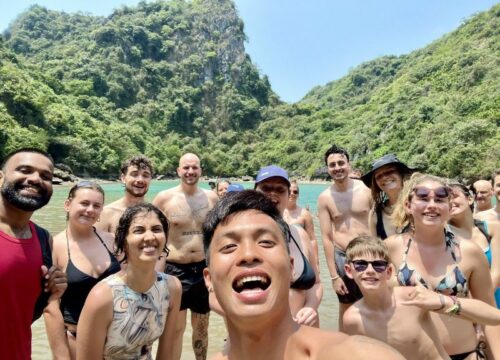
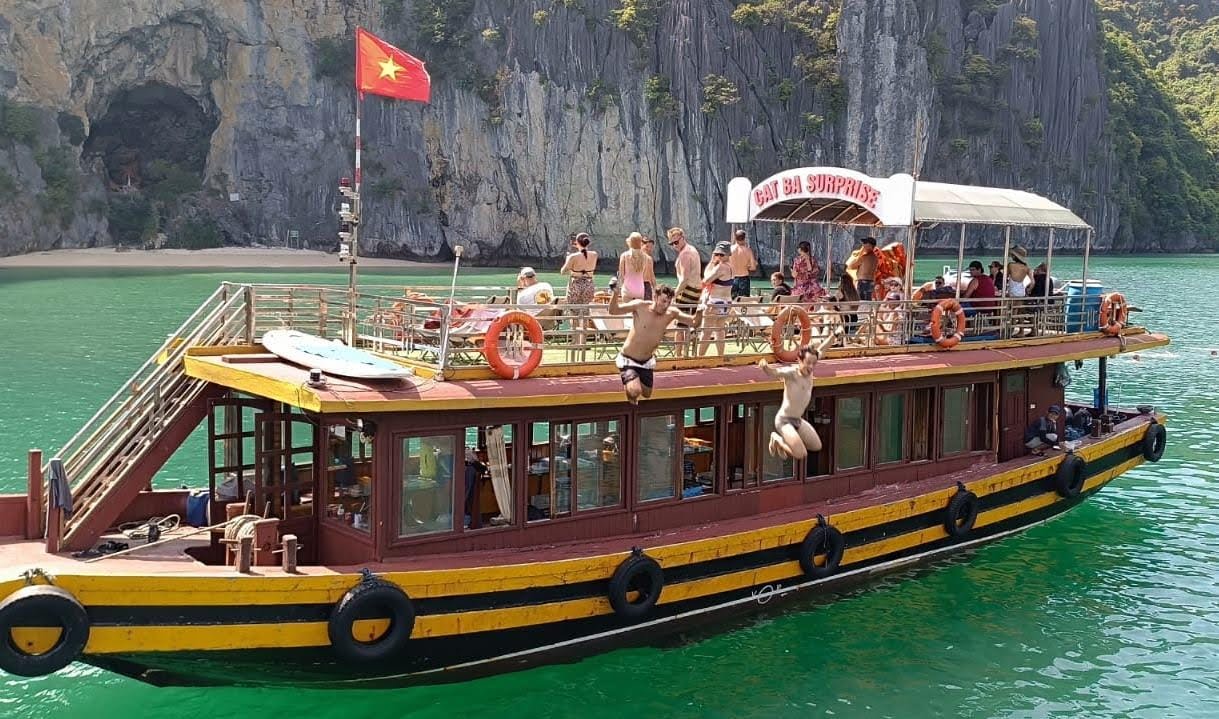
Cat Ba Local has always been a small-group, deep-local operator: maximum 30 guests, guides who grew up on this island, food sourced from local fishermen, and access to corners of Lan Ha Bay that larger boats can’t reach.
Honestly, the Sun Group development has been good for our kind of business. It brings more total visitors to the island, including international travelers who arrive with high expectations and are actively looking for authentic experiences beyond the resort package. That’s our customer.

Will Cat Ba Become Another Halong City?
No. Three structural facts make Cat Ba fundamentally different from the mainland development corridor:
It’s an island. Urbanization is self-limiting in ways that don’t apply to mainland coastal cities. Infrastructure costs more, transport bottlenecks persist, and finite land creates natural ceilings on growth.
It’s a biosphere reserve. 80% of the island’s land cannot legally be developed — that’s not a policy preference, it’s an internationally recognized constraint.
It’s a border island. Cat Ba’s proximity to Vietnam’s maritime boundaries means national defense interests place additional limits on the scale and type of development permitted here — a real constraint that rarely appears in a developer’s brochure.
The most likely trajectory: the central town becomes a more polished, well-serviced base, while Lan Ha Bay remains as wild as ever. Two speeds, two experiences, on the same island.
Is Cat Ba Island Still Worth Visiting in 2026?
Cat Ba in 2026 is an island in transition. The town is louder, busier, and more built-up than it was. If you visited in 2015 and are returning now, central Cat Ba will surprise you.
But Lan Ha Bay? The national park? The beaches you kayak to at sunrise? The lagoon where the water turns blue-green at midnight? Those are exactly as they were. In some cases, better.
We know because we go there every morning. Come, and we’ll show you.

Cat Ba Local runs small-group tours on Lan Ha Bay — Full Day, Sunset, Bioluminescent Night Kayak, and Overnight Floating Homestay. All tours depart from Ben Beo pier, on the Lan Ha Bay side of the island. Get in touch or browse our tours here.
Related Reading
Frequently Asked Questions About Cat Ba Island Construction 2026
Is Lan Ha Bay affected by the Sun Group construction on Cat Ba Island?
No. The Sun Group Xanh Island development is located in Dong Ho Bay on the central town waterfront — the west-facing harbor side of the island. Lan Ha Bay is on the east side, separated by a 3-kilometer drive and a 30–60 minute boat ride. 100% of Lan Ha Bay is a UNESCO World Biosphere Reserve and has not been touched by this development. The kayaking routes, limestone lagoons, and wild beaches remain completely intact.
Is Cat Ba Island still worth visiting in 2026 despite the construction?
Yes. The construction is confined to Cat Ba town’s central waterfront. The island’s main attractions for international travelers — Lan Ha Bay, Cat Ba National Park, and the wild beaches — are completely unaffected. The natural areas covering 80% of the island remain protected and pristine. Construction on the remaining high-rise towers is expected to finish by 2027, after which the town will be significantly more organized than before.
Did UNESCO warn about the Cat Ba Island development?
UNESCO’s concerns about Cat Ba were specifically about illegal bungalows and resorts built without permits on wild beaches inside Lan Ha Bay — not about the Sun Group town center development. From 2023 onward, Vietnamese authorities required those illegal structures to be demolished and the beaches restored. The Xanh Island project in Cat Ba town falls under Hai Phong city’s master plan and outside the UNESCO World Heritage buffer zones.
Will Cat Ba Island become overdeveloped like Halong City?
Unlikely, for three structural reasons. First, Cat Ba is an island — infrastructure constraints naturally limit the scale of development. Second, 80% of the island’s land is legally protected as National Park and cannot be built on. Third, Cat Ba’s status as a border island means national defense considerations place additional limits on development. The most likely outcome is a more polished town center coexisting with a permanently wild Lan Ha Bay.
When will the Cat Ba Island construction be finished?
The Sun Group Xanh Island project is targeted for completion in 2027. As of mid-2026, the central promenade, Con So Square, shophouses, and new public beach are already complete and open. Villa units are approximately 80% done. Three high-rise towers remain at around 40% completion and are the main visible construction still ongoing.